
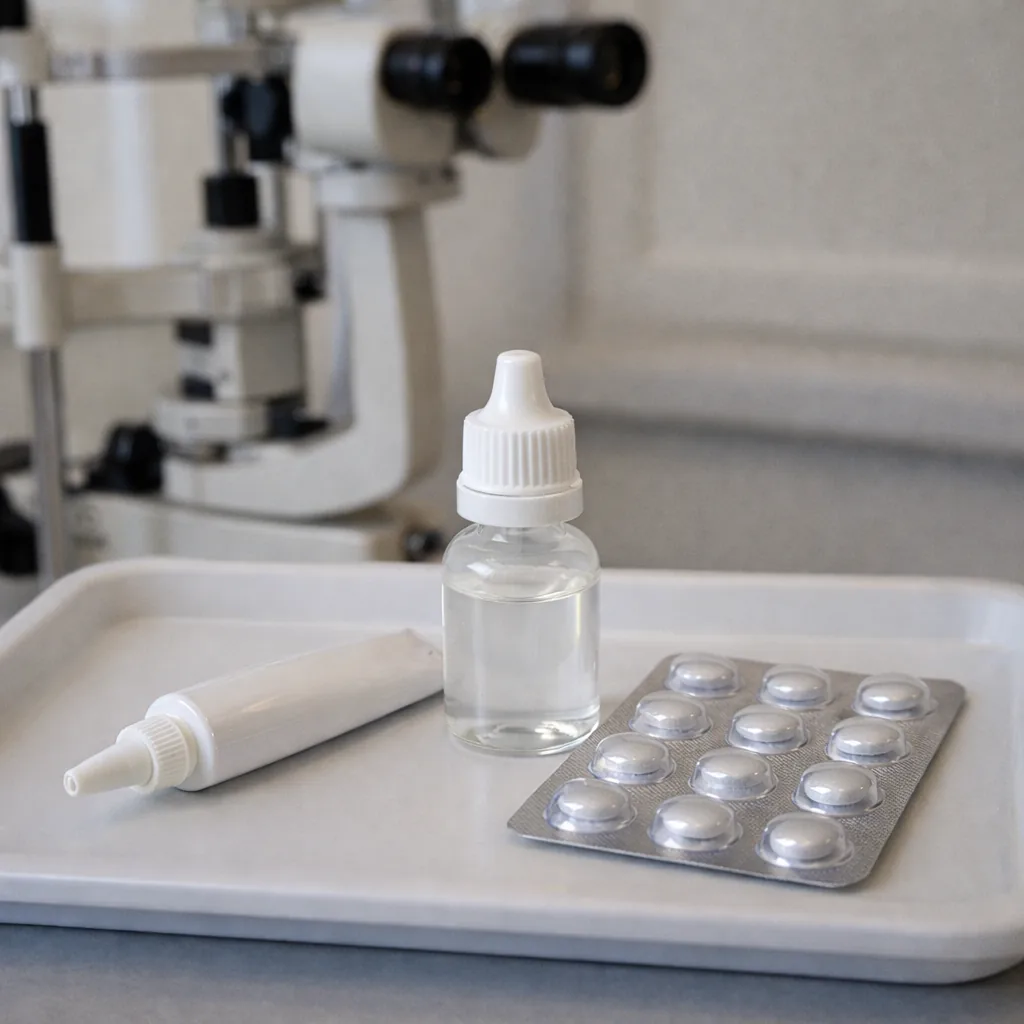
If daily warm compresses and lid hygiene are not controlling your symptoms, blepharitis treatment may benefit from clinician-guided options beyond home care, depending on cause, severity, and response.
Explore this topic: Visit the Blepharitis treatments (UK) hub for step-by-step options.
NHS/GP pathway in the UK
In the UK, most patients start with a GP or community optometrist. If symptoms persist despite consistent hygiene, you may be referred to an ophthalmology clinic for specialist assessment and targeted treatment.
- First line: Lid hygiene, lubricants, and risk-factor control.
- Referral: Ongoing symptoms, recurrent styes/chalazia, or suspected MGD may prompt referral.
- Urgent care: Seek same-day assessment for severe pain, marked light sensitivity, or vision changes.
Topical Antibiotics
Antibiotic drops or ointments applied directly to the lid margin are often the first prescription step, especially for anterior blepharitis.
- UK note: Erythromycin ointment is commonly mentioned in US guidance but is not routinely available in the UK.
- Azithromycin eye drops (Azyter): A prescription-only drop in the UK that contains azithromycin and is used to treat susceptible bacterial eye infections.
- Why it helps: Azithromycin has anti-inflammatory effects and can reduce bacterial load, which may improve lid margin inflammation.
Oral Antibiotics
Doxycycline
Low-dose oral doxycycline is frequently prescribed for chronic posterior blepharitis (MGD) and ocular rosacea.
"At low doses, doxycycline acts primarily as an anti-inflammatory agent. It can improve the fluidity of the gland oil."
Courses are typically several weeks to a few months, depending on response. It can cause sun sensitivity and stomach upset.
Oral Azithromycin
Oral azithromycin is sometimes used as a second-line option for more severe or persistent posterior blepharitis that has not improved with conservative care.
- Why it is chosen: Shorter courses and often fewer stomach side effects than some alternatives.
- How it helps: Reduces bacteria and also calms inflammation on the eyelid margin.
- Effectiveness: Some studies suggest oral azithromycin may have comparable symptom improvement to doxycycline in selected MGD cases; study designs and dosing vary, and clinicians individualise treatment.
There is no single standard dosing schedule for blepharitis-your clinician will tailor the regimen to your case.
Topical Steroids
Short courses of topical steroid drops may be used under supervision for significant inflammation. Because they can raise eye pressure and have other risks, clinicians monitor and limit use.
In-Office Procedures
Technology has advanced significantly in treating MGD. In-office procedures can provide meaningful added benefit for selected patients when home care is insufficient; evidence supports improvements in signs and symptoms, though response and durability vary.
- Thermal Pulsation (LipiFlow, iLux) - Precise heat and gentle pressure to melt and express blocked meibomian glands. Read more ->
- Intense Pulsed Light (IPL) - Targets abnormal vessels, heats glands, and reduces bacterial and mite load. Read more ->
- Low-Level Light Therapy (LLLT) - Gentle light-based therapy that warms eyelids and supports gland function. Read more ->
- BlephEx - Micro-exfoliation that removes biofilm and scurf from the eyelid margin. Read more ->
Emerging and Experimental Treatments for Blepharitis
These options are newer, specialist-led, or still evolving. Evidence is growing and availability varies.
- Demodex-targeted options: Newer drops and off-label approaches aimed at mite-related lid inflammation.
- Gland-opening procedures: Techniques like meibomian gland probing that are still evolving.
- Newer thermal systems: Devices designed to warm lids while the eyes remain open.
Read the full overview and evidence summary here: Emerging and Experimental Treatments.
Explore next
Related content
Continue with related guides that build on this topic and keep your care plan consistent.