
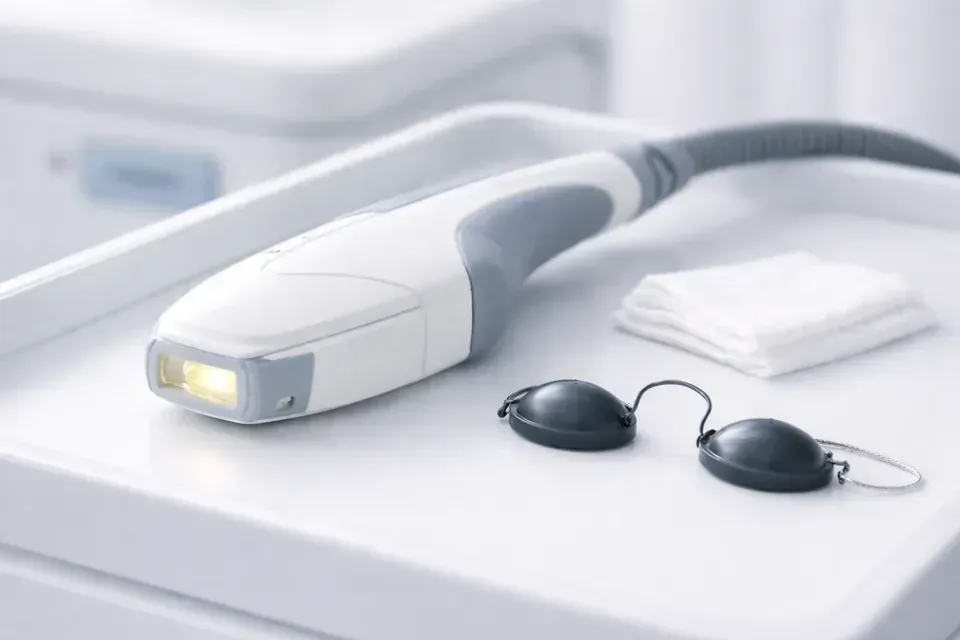
Intense Pulsed Light (IPL) therapy is a non-invasive treatment that uses high-intensity flashes of light to reduce inflammation and unblock meibomian glands. It is one of the more established in-office options that can help selected patients with ocular rosacea and MGD; outcomes vary.
How It Works
IPL works through multiple mechanisms to break the cycle of inflammation:
- Closing Abnormal Blood Vessels: Blepharitis and Rosacea cause telangiectasia (tiny spider veins) on the eyelids. These vessels leak inflammatory factors. IPL energy is absorbed by the hemoglobin, sealing these vessels shut.
- Heating the Glands: The light energy converts to heat, liquefying the hardened oil in the meibomian glands, making it easier to express.
- Reducing Bacteria/Mites: IPL may reduce inflammatory drivers (including abnormal vessels and heat-related changes) and may affect skin microbial/mites indirectly; the degree and clinical relevance vary.
The Procedure
Safety First: Protective eye shields are placed over your eyes to protect them from the bright light.
Application: A cooling gel is applied to the skin. The doctor applies the IPL handpiece to the skin around the eyes (cheekbones, temples, and sometimes the eyelids directly if a specific ocular shield is used). You will see bright flashes of light, even with eyes closed.
Sensation: Most patients describe the sensation as a rubber band snapping against the skin. It is generally well-tolerated.
Expression: Immediately after the light treatment, the doctor may perform manual gland expression to clear the now-melted oil.
Treatment Course
IPL is not a "one and done" treatment. Protocols vary by device and clinician; many use a short series (often 3-4 sessions spaced a few weeks apart) with individualized maintenance based on response.
Who Is It For?
IPL may be considered for these groups after assessment; suitability depends on skin type, medications, and clinician judgment:
- Ocular Rosacea
- Chronic MGD unresponsive to warm compresses
- Evaporative Dry Eye
Important Consideration: IPL targets pigment (melanin). It may not be suitable for patients with darker skin tones (Fitzpatrick skin types V and VI) due to the risk of depigmentation, although newer machines often have specific settings for varying skin types.
Explore next
Related content
Continue with related guides that build on this topic and keep your care plan consistent.