
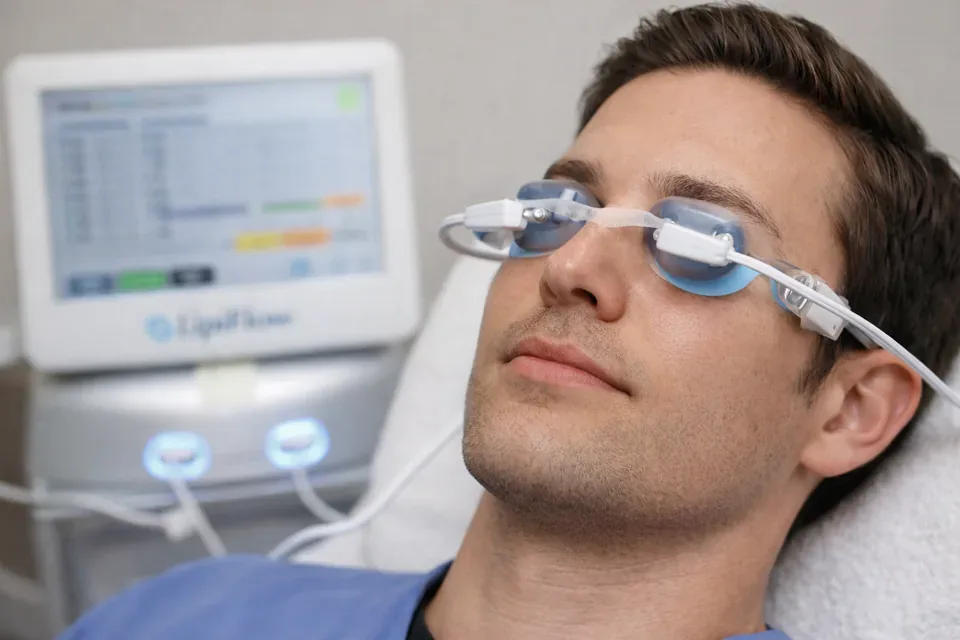
Thermal pulsation devices (such as LipiFlow or iLux) combine controlled heat with gentle pressure to clear blocked meibomian glands. In practical terms, it is a clinic-based approach that applies controlled heat and pressure to help express meibomian glands.
How Thermal Pulsation Works
Devices target a safe therapeutic temperature range (often in the low 40s C); specific settings vary by device and clinician. At the same time, the device applies carefully calibrated pressure from the outer lid to express the melted oil from the glands.
- Heat: Liquefies thickened meibum.
- Pressure: Gently expresses the oil through the gland openings.
- Consistency: Maintains an even, safe temperature throughout treatment.
Who Is It For?
Thermal pulsation is most helpful for patients with Meibomian Gland Dysfunction (MGD) and evaporative dry eye who do not respond adequately to home hygiene alone.
- Chronic dry eye with rapid tear breakup time.
- Thick or toothpaste-like meibum on gland expression.
- Persistent symptoms despite consistent warm compresses.
What to Expect During the Procedure
- Assessment: The clinician confirms MGD and evaluates gland function.
- Device placement: The applicator sits on the eyelids and conjunctival surface.
- Treatment: Heat and pressure are applied for about 12 minutes (device dependent).
- Aftercare: You can return to normal activities immediately.
Results and Benefits
Many patients notice clearer oil secretion and improved comfort within weeks. Evidence supports symptom improvement for months in some patients, but durability varies. Some people repeat treatment, while others maintain improvement with home care.
- Improved meibomian gland function.
- Reduced irritation, burning, and fluctuating vision.
- Some patients report reduced drop use, but continue lubricants as needed; results vary.
Risks and Considerations
Thermal pulsation is generally well tolerated. Mild transient redness, lid tenderness, or temporary blurred vision can occur. It is not suitable for active eyelid infection or severe eyelid inflammation until controlled.
Important: Thermal pulsation treats gland obstruction but does not cure the underlying condition. Ongoing lid hygiene remains essential for long-term control.
How It Compares to Other Treatments
- Warm compresses: Effective but less consistent and lower temperature control.
- IPL: Better for ocular rosacea and vascular inflammation; can be combined with gland expression.
- LLLT: Gentle light therapy; often used for maintenance or in combination.
Explore next
Related content
Continue with related guides that build on this topic and keep your care plan consistent.