
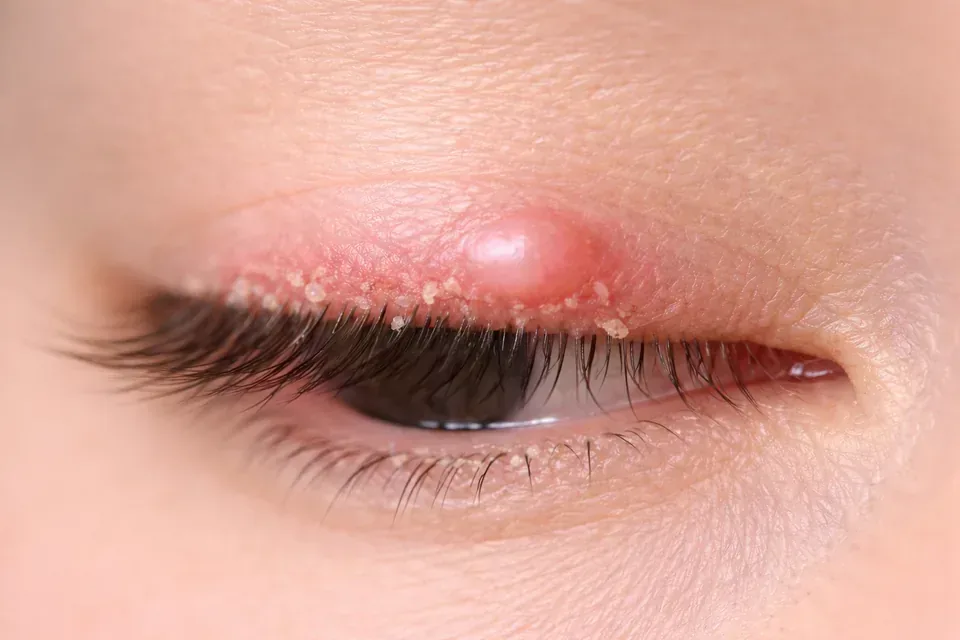
Chronic inflammation of the eyelid margin can damage nearby structures, leading to a cascade of other eye problems. Early assessment can help reduce the risk of complications. Seek urgent care for severe pain, marked light sensitivity, or vision changes.
Explore the full overview: See the Blepharitis symptoms and diagnosis hub for related guides.
Stye vs Chalazion
These are the most common lumps associated with blepharitis.
- Stye (Hordeolum): An acute, painful infection of an eyelash follicle or oil gland. It looks like a red pimple on the eyelid edge. It is usually caused by Staph bacteria.
- Chalazion: A painless (or less painful), firm lump further back on the eyelid. It is caused by a blocked oil gland where the oil has ruptured into the surrounding tissue, causing a granulomatous reaction. It is sterile inflammation, not an infection.
Management: Both respond to heat, but chalazia can persist for months and may require surgical incision and curettage if they do not resolve.
Lash Problems
Long-term anterior blepharitis damages the hair follicles.
- Madarosis: The loss of eyelashes.
- Trichiasis: Lashes growing in the wrong direction (inwards). These misdirected lashes rub against the sensitive cornea, causing pain and potential ulcers.
- Poliosis: Lashes turning white.
Marginal Keratitis
This is a hypersensitivity reaction. The immune system reacts to Staph toxins on the eyelid margin by creating white blood cell infiltrates on the cornea (the clear window of the eye).
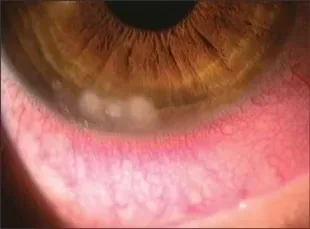
Diagram showing a small white ulcer on the cornea near the eyelid margin.
Symptoms: Sudden pain, redness, and light sensitivity. Marginal keratitis needs urgent clinical assessment. Treatment may include antibiotic and/or anti-inflammatory prescription drops (sometimes including steroids), but this must be clinician-directed because steroid drops can be harmful in some infections.
Evaporative Dry Eye
MGD often contributes to evaporative dry eye, but severity varies and not everyone has significant symptoms. When the tear-film oil layer is impaired (common in MGD), evaporation can increase. The degree varies by person and severity. This can lead to reflex watering-patients often complain "my eyes are watering, how can they be dry?" The tears are plentiful but of poor quality (too watery).
Explore next
Related content
Continue with related guides that build on this topic and keep your care plan consistent.