
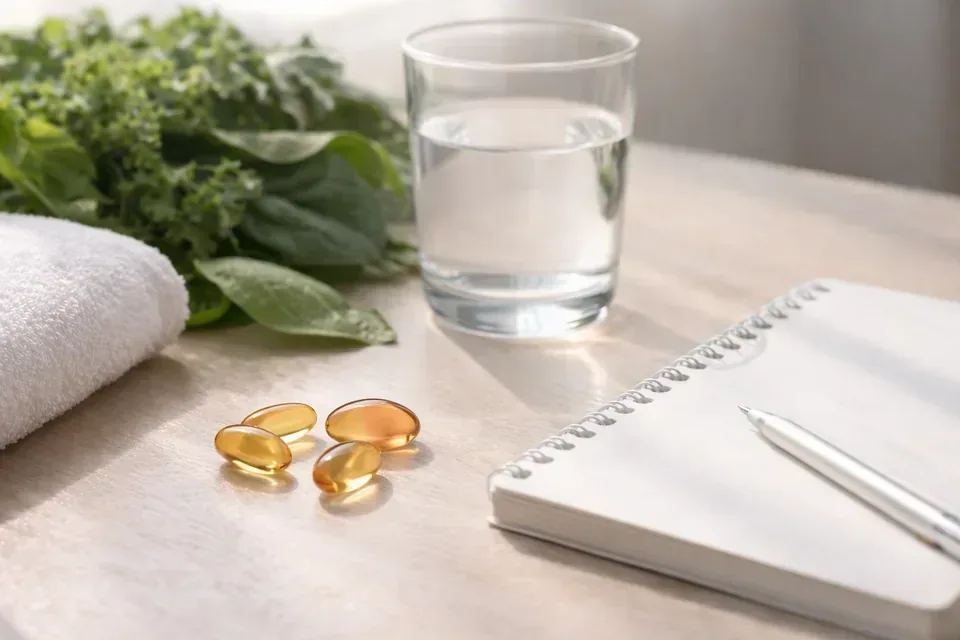
While lid hygiene handles the external symptoms, true long-term management of blepharitis often requires looking at your systemic health. Your eyes are part of your body, and inflammation is rarely isolated.
Explore this topic: Visit the Daily blepharitis care hub for linked routines and self-care guidance.
The Anti-Inflammatory Diet
Some systemic inflammatory conditions (and skin conditions like rosacea) can be associated with ocular surface symptoms. The relationship varies person-to-person. A balanced diet that supports general health may help some people. Evidence for diet patterns specifically reducing blepharitis flares is mixed, and effects vary.
- Eat: Leafy greens, berries, fatty fish, nuts, and olive oil.
- Avoid: Processed sugars, excessive alcohol, and high-omega-6 vegetable oils (which can be pro-inflammatory if not balanced with omega-3s).
Omega-3 for MGD
Omega-3s have mixed evidence; some studies show benefit while others do not.
"Consistency is key. It typically takes 6 to 12 weeks of daily supplementation to notice a change in oil quality."
Dosing should be individualized; discuss dose and interactions with a clinician and consider dietary sources.
Blinking exercises for MGD (20-20-20 rule)
When we stare at digital screens, our blink rate drops by up to 60%. Worse, we often do "partial blinks" where the lids do not fully touch. This prevents the meibomian glands from releasing oil.

Illustration of a hard blink exercise.
Try this exercise: Every 20 minutes, look 20 feet away for 20 seconds. During this break, perform 5 full, gentle blinks rather than forceful squeezing; stop if uncomfortable.
Hydration and Environment
Dehydration reduces the water volume of the tear film, making it saltier (hyperosmolar), which triggers inflammation.
- Drink Water: Aim for adequate daily intake.
- Humidify: In winter or air-conditioned offices, use a humidifier to prevent tear evaporation.
- Sleep Mask: If you sleep with your eyes slightly open (nocturnal lagophthalmos), use a moisture-chamber goggle or sleep mask to seal in humidity overnight.
Explore next
Related content
Continue with related guides that build on this topic and keep your care plan consistent.