
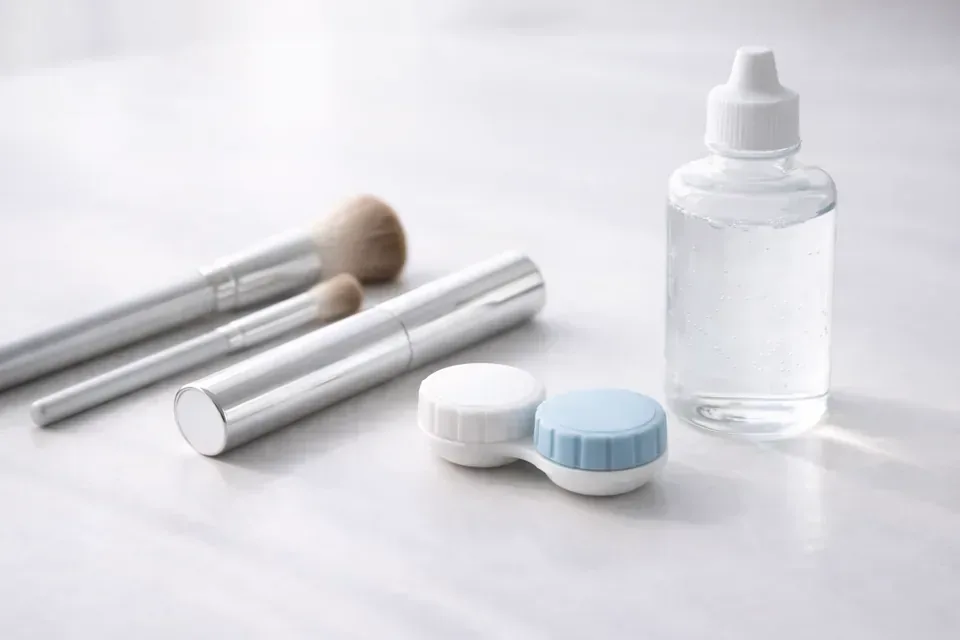
Cosmetics, lash extensions, and contact lenses may worsen symptoms for some people or during flares, particularly if products irritate the lid margin or interfere with gland openings. They can introduce bacteria, block gland openings, and destabilize the tear film.
Explore this topic: Visit the Daily blepharitis care hub for linked routines and self-care guidance.
Makeup: The Safe Way
1. No "Tightlining": Never apply eyeliner to the "waterline" (the inner rim of the eyelid). This places pigment and wax directly over the openings of the meibomian glands, physically plugging them.
2. Toss It Out: Mascara can become contaminated over time. Consider replacing mascara regularly (often suggested every ~3 months) and sooner if it smells/changes, causes irritation, or you've had an eye infection. Avoid sharing eye makeup, keep applicators clean, and stop using products that irritate your eyes.
3. Ingredients to Avoid:
- Retinoids (Retinol): Retinoids (especially systemic retinoids like isotretinoin, and topical products applied very close to the lid margin) may worsen dryness and can affect meibomian gland function in some people. If symptoms worsen, avoid applying retinoids near the eyelids and discuss alternatives with a clinician.
- Glitter: Tiny particles can flake off and get trapped under the eyelid.
- Waterproof Mascara: Requires harsh removers that strip natural oils. Stick to tubing mascaras or warm-water washable formulas.
Contact Lenses
Contact lenses can worsen comfort during flares for some people by interacting with the tear film and ocular surface. Consider reducing wear time or pausing lens wear during flares, and seek advice if redness, pain, or light sensitivity occur.
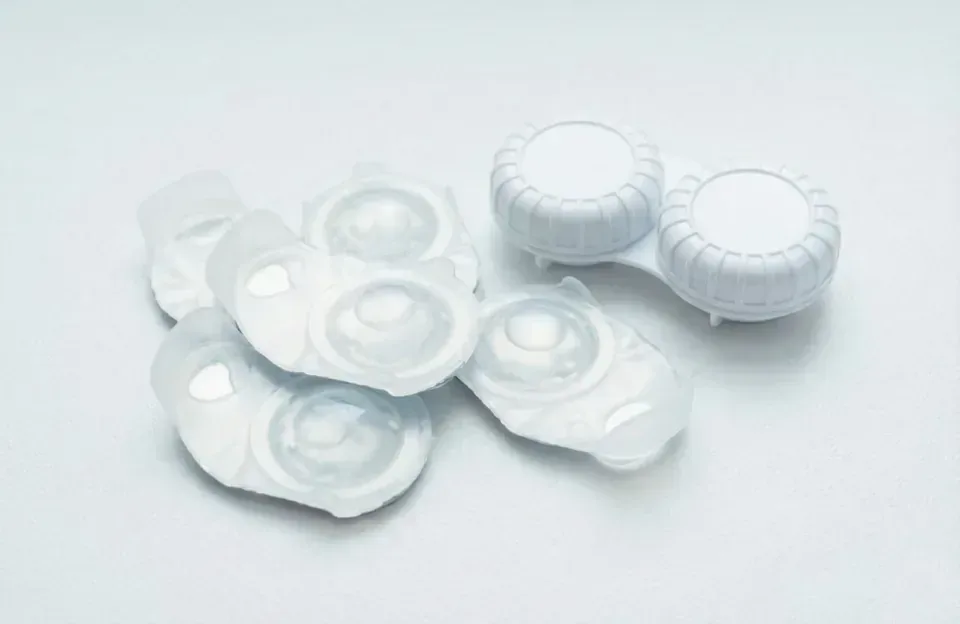
Daily disposables can reduce some hygiene-related risks and may be better tolerated by some people, but suitability depends on your eyes, prescription, and clinician advice.
The Rules
- Switch to Dailies: Daily disposable lenses are sterile every morning. Reusable (monthly) lenses develop a biofilm of protein and bacteria that cleaning solutions cannot fully remove.
- Limit Wear Time: Reduce wear time to 8-10 hours max. Switching to glasses can reduce irritation during flares by reducing lens wear; the benefit is from less lens exposure, not "breathing."
- During a Flare: Consider reducing or pausing contact lens wear during flares; seek assessment if pain, discharge, or light sensitivity occurs, as contact lens wear increases ulcer risk in infections.
- Peroxide Solutions: If you must use reusable lenses, use a hydrogen peroxide based cleaning system (like Clear Care) rather than multipurpose solution, as it is more effective at killing bacteria and contains no preservatives that end up in the eye.
Lash extensions and blepharitis
Lash extensions can worsen blepharitis by trapping debris near the lid margin and making cleansing more difficult. The adhesives can also irritate sensitive eyelid skin.
- During active flares: Avoid extensions until symptoms settle.
- Hygiene: If you keep extensions, clean the lid margin daily and avoid oil-based removers that loosen adhesive.
- Warning signs: Redness at the lash line, crusting, or itchiness are reasons to pause extensions and seek advice.
Explore next
Related content
Continue with related guides that build on this topic and keep your care plan consistent.