
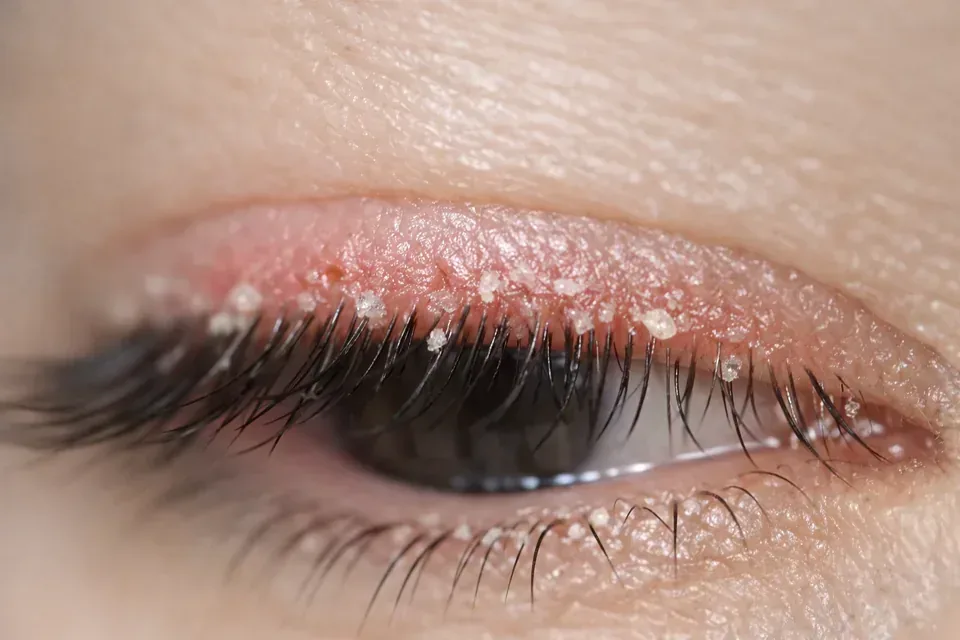
Both blepharitis and dry eye can cause burning, grit, and watering. If you are comparing dry eye vs blepharitis, the key difference is where the problem starts: the eyelid margin (blepharitis) versus the tear film (dry eye disease). In UK clinics, most patients have a blend of both, so learning the patterns helps you choose the right care.
Dry eye vs blepharitis: where the problem starts
- Blepharitis: Inflammation of the lid margin and lash line. You often see crusts, scales, or redness right where the lashes grow.
- Dry eye disease: An unstable tear film. The eye surface dries between blinks, causing fluctuating blur and irritation.
Signs that point to blepharitis
- Crusting or dandruff-like debris at the lash base.
- Red or thickened lid margins.
- Symptoms worse on waking, with sticky lashes.
- Recurrent styes or chalazia.
Signs that point to dry eye without blepharitis
- Fluctuating blur that improves after blinking.
- Symptoms worse after screen use or windy environments.
- Watery eyes that paradoxically feel dry.
- Minimal lid crusting or lash debris.
Why the two often overlap
Posterior blepharitis is driven by meibomian gland dysfunction (MGD), which reduces the oil layer of the tear film. Without that oil, tears evaporate quickly, producing dry eye symptoms. That is why many UK patients need both lid hygiene and tear supplements.
UK care pathway: what to expect
In the UK, you can start with a high street optometrist or your GP. Most cases are managed with daily lid hygiene and lubricants. Referral to NHS ophthalmology is usually for persistent symptoms, corneal involvement, or diagnostic uncertainty.
| Feature | Blepharitis | Dry Eye |
|---|---|---|
| Main location | Lid margin and lashes | Tear film and eye surface |
| Typical signs | Crusts, redness, collarettes | Fluctuating blur, sting, watering |
| First-line care | Warm compress, lid cleaning | Lubricants, environment changes |
When to seek urgent care
Blepharitis and dry eye should not cause severe pain, sudden vision loss, or significant light sensitivity. If you have these symptoms, seek urgent assessment, as other eye conditions may be present.
Bottom line
If your symptoms are driven by lid margin inflammation, daily lid hygiene is essential. If dryness is the main issue, lubricating drops and environmental control matter more. Many people need both, and a clinician can confirm the dominant cause.
Related content
FAQs
Dry eye vs blepharitis: can you have both at the same time?
Yes. Posterior blepharitis (MGD) is a major cause of evaporative dry eye, so the conditions often overlap.
Is dry eye always blepharitis?
No. Dry eye can be caused by reduced tear production, medications, or environmental factors without lid margin inflammation.
Do warm compresses help dry eye?
They help if dry eye is driven by blocked meibomian glands. They are less useful for purely aqueous tear deficiency.
When should I seek urgent help for red or painful eyes?
Seek urgent assessment if you have severe pain, sudden vision changes, trauma, or marked light sensitivity.